
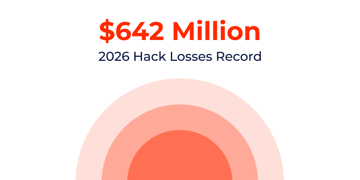
Uncover the details behind April 2026's biggest crypto hacks.
More than 2% of Europe's GDP — an estimated $750 billion — is laundered annually. And money laundering is what makes organised crime sustainable, scalable, and resilient. Combating it requires not just political will, but workable rules, which, in turn, require input from those who implement them.
That is the idea behind AMLA's public consultation — a process open to obliged entities and compliance experts who can bring real-world experience to shaping how financial crime is combated across the EU and beyond.
In May 2026, Yulia Murat, Head of Regulatory Affairs at Global Ledger, submitted a formal response to the draft Regulatory Technical Standards (RTS) on Customer Due Diligence (CDD). Drawing on years of experience in compliance, Yulia shared her observations that could strengthen the standards before they are finalised.
But first of all, let's briefly outline what the draft RTS is about.
Key Takeaways
-
Sanctions screening based on list-matching alone may miss indirect exposure — proximity and cluster analysis can close that gap.
-
Unhosted wallets create a structural CDD blind spot that on-chain data can help address, even when identity documents are unavailable.
-
Cross-chain transactions interrupt the audit trail and are actively used to obscure the origin of funds — they warrant a higher level of scrutiny.
-
Across all three areas, blockchain analytics is already being used by compliance teams in practice — acknowledging this in the standards would provide clarity for the whole industry.
What Is the Draft RTS on Customer Due Diligence?
Established in 2024, the Anti-Money Laundering Authority (AMLA) is building a unified AML framework that will apply consistently across all EU member states for the first time.
As part of that process, AMLA initiated a public consultation on the draft Regulatory Technical Standards on Customer Due Diligence under Article 28(1) of Regulation (EU) 2024/1624 — inviting industry experts to review the proposed rules and share practical feedback before they are finalised.
The draft RTS sets out detailed requirements for how obliged entities must identify and verify customers, assess risk, and monitor transactions — bringing crypto-asset service providers fully into the EU's regulatory perimeter alongside traditional financial institutions.
As part of this consultation, Yulia Murat contributed her expertise on the areas worth discussing — particularly for compliance teams and CASPs navigating the practical realities of on-chain transactions.
Three Questions AMLA's Due Diligence Standards Leave Open
Crypto-asset transactions introduce specific challenges that traditional financial compliance methods were not designed to handle. Pseudonymous addresses, unhosted wallets, and cross-chain protocols do not fit neatly into a framework built around identifiable counterparties and verifiable transaction histories.
The draft RTS is an attempt to address these challenges. Below, we look at three points worth raising before the standards are finalised.
1. Sanctions screening stops at the list
The draft RTS mandates wallet address screening under Article 30. This is necessary. But in its current form, sanctions screening is treated as list-matching — check whether a wallet appears on an official designated list, and move on if it does not.
The challenge is that sanctioned actors routinely use intermediary wallets to distance funds from their origin. A wallet can carry substantial indirect exposure to a sanctioned entity without appearing on any official list. The funds passed through multiple intermediate addresses before arriving and standard list-based screening cannot catch it.
The numbers illustrate the scale of the problem:
-
According to the Global Ledger data, licensed centralised exchanges have processed around $13 billion in sanctioned funds over the past two years.
-
$8.26 billion of Garantex-linked funds were processed in 2024 — of which $6.51 billion was handled by EU-licensed entities.
-
Centralised exchanges account for nearly $4.92 billion (30%) of total Grinex exposure.
Read More
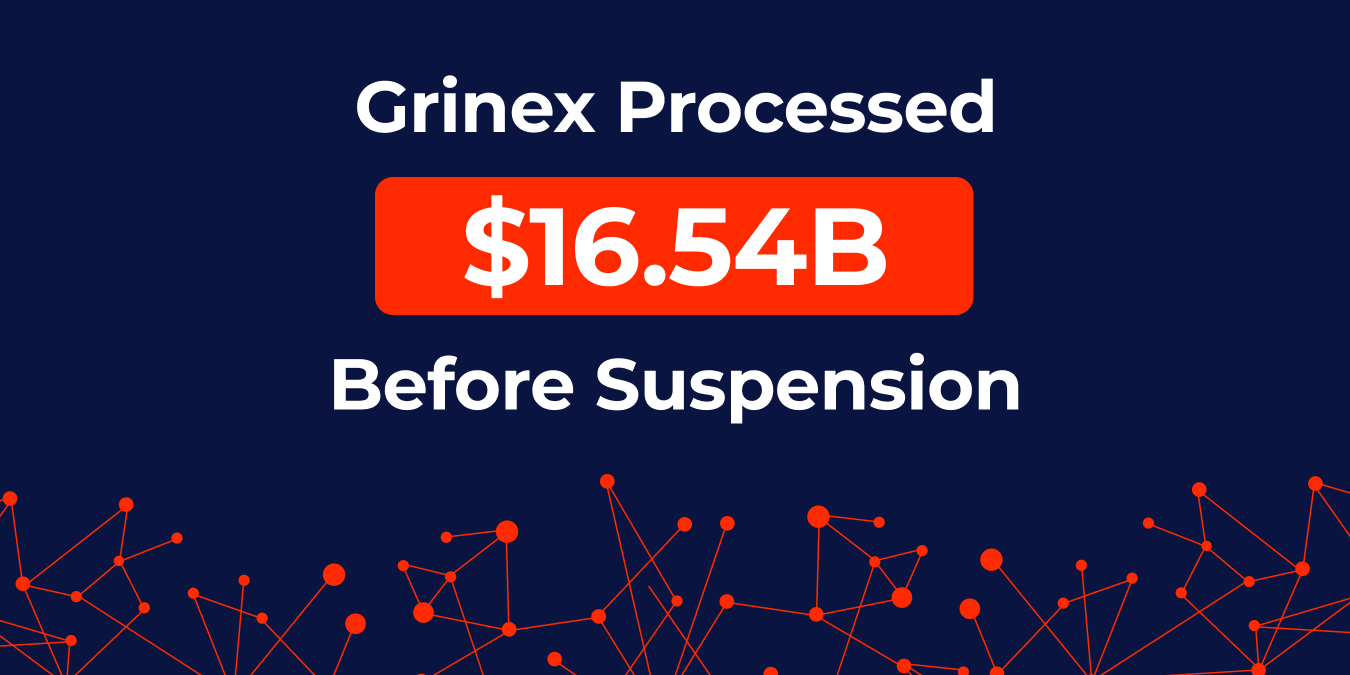
Grinex Processed $16.54B Before Suspension
How Grinex processed about $16.54 billion worth of A7A5 and USDT before suspension. The platform halted its operations on April 16, 2026, after a hack — find out more in our investigation.
Read the Investigation
How this gap can be addressed
Blockchain analytics tools address this sanctions screening list-matching gap by tracing transactions beyond the immediate wallet. Such tools can identify connections to sanctioned addresses multiple steps back in the chain. Crucially, they don't just flag a connection: they quantify it, expressing a wallet's exposure to sanctioned funds as a percentage of total transaction volume, and indicating how close that exposure is to the wallet being assessed.
Cluster analysis adds another layer: where a wallet belongs to the same cluster as a sanctioned wallet — sharing infrastructure, deposit patterns, or controlling entities — that connection is invisible to list-based screening but detectable through analytics.
Our perspective: Acknowledging proximity and cluster analysis as part of risk-based wallet screening would give obliged entities the clarity they need.
2. Unhosted wallets have no CDD solution
When a CASP's customer transacts with an unhosted wallet, there is no direct way to obtain information about the wallet owner through conventional CDD methods. The wallet is pseudonymous by design: there is no counterpart institution to contact and no registry to query.
This is not a niche scenario. Peer-to-peer transactions via unhosted wallets were identified as a key vulnerability in the FATF's March 2026 report. It noted that the absence of an obliged entity in P2P transactions creates a structural blind spot that conventional CDD frameworks were not designed to tackle.
How this gap can be addressed
Blockchain analytics offers a practical path forward — not by replacing identity verification, but by addressing a different and equally relevant question: what is the risk profile of this counterparty, given what can be observed on-chain?
Source and destination of funds, transaction history, connections to known high-risk entities, exposure to mixers or privacy protocols — all of this is assessable without requiring the wallet owner's identity documents. Risk-based CDD does not always require establishing who a counterparty is; in many cases, the more relevant question is what their funds have been exposed to.
Our perspective: Explicitly recognising blockchain analytics as an appropriate method for assessing the risk profile of unhosted wallet counterparties would fill a gap that the current draft leaves open.
3. Cross-chain transactions break the audit trail
When funds move between blockchains through a cross-chain protocol, the transaction trail ends on the originating chain and begins — often with different identifiers — on the destination chain.
Full tracing is difficult, and in some cases impossible with current tools.
Many cross-chain protocols operate as permissionless smart contracts and are not designed to detect or freeze illicit flows. Illicit actors use them precisely because they interrupt the audit trail, making it harder to identify the origin of funds.
In 2025, hackers routed over $2.01 billion of stolen funds through bridges — nearly 50% of total losses, and more than three times the volume routed through mixers and privacy protocols.
Read More
The 2026 Laundering Race Report
An H1–H2 breakdown of 255 hacks in 2026 shows that hackers are getting faster. Read more on how attackers move and launder stolen funds — and what compliance teams need to watch for to stay prepared.
Get the Report
How this gap can be addressed
Blockchain analytics tools can help bridge this traceability gap.
By mapping transaction flows across chains and flagging activity associated with known high-risk bridges and protocols, they allow compliance teams to make informed risk assessments even where the full transaction trail cannot be reconstructed.
Applying enhanced scrutiny to cross-chain transactions — including requests for additional information about the source of funds — is a practical step that obliged entities can take today.
Our perspective: Acknowledging сross-chain transactions as a category that warrants enhanced scrutiny would be a meaningful addition to the accompanying guidance.
Final Thoughts
Sanctions screening blind spots, unhosted wallet anonymity, and cross-chain traceability gaps are challenges that compliance teams face every day. Addressing them requires tools that go beyond list-matching and conventional verification methods.
Global Ledger's KYT and KYB solutions are built for exactly this — from proximity and cluster analysis to unhosted wallet risk assessment and cross-chain transaction monitoring. Book a demo to see how these solutions can strengthen your day-to-day compliance.